
-
Written by Peris Wambu
- Updated on Mar 26, 2026
Kenya's Gambling Regulation Overhaul: From BCLB to GRA
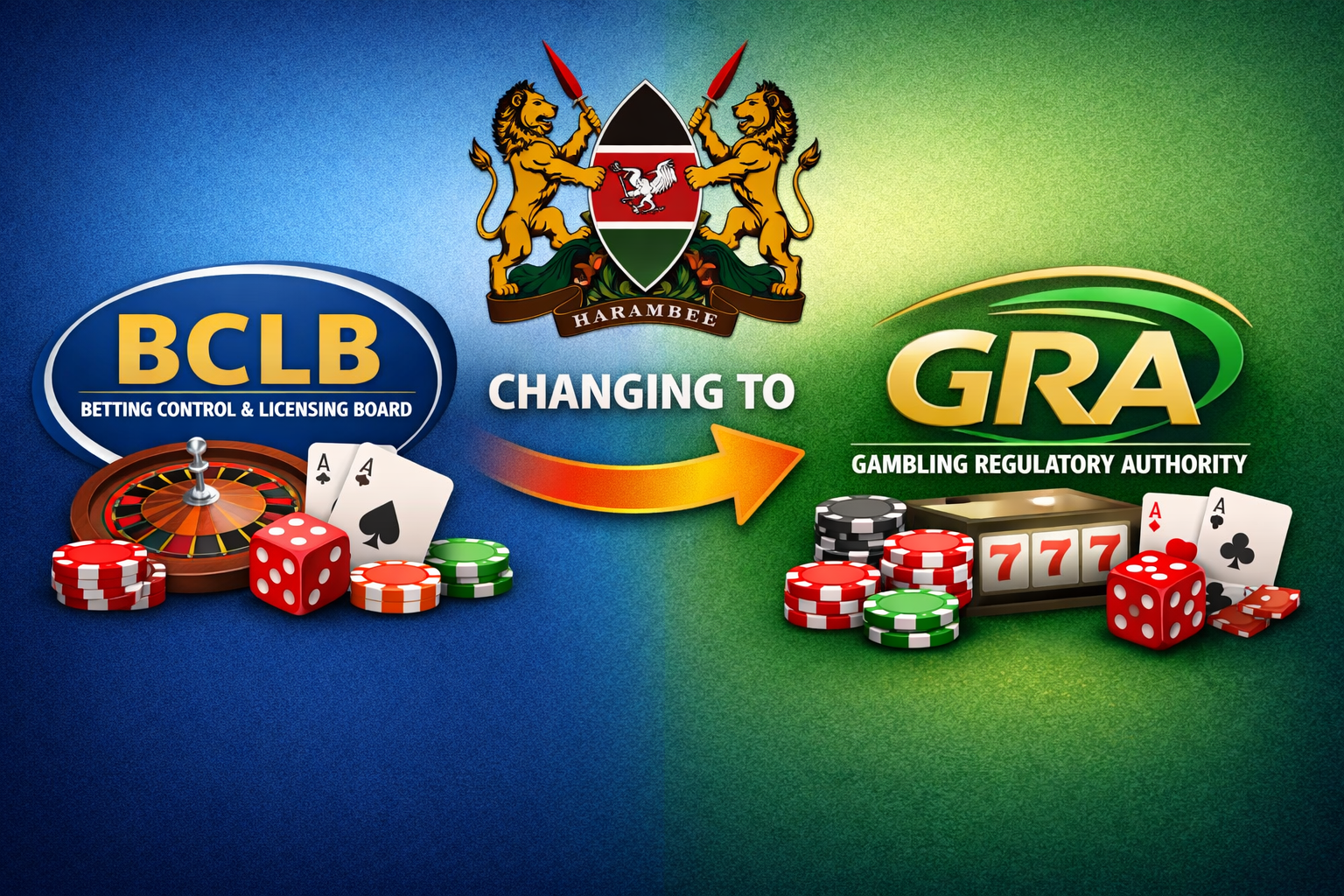
Kenya’s gambling landscape has undergone its most significant transformation in nearly six decades. In February 2026, the Betting Control and Licensing Board (BCLB), which had governed the country’s gambling industry since 1966, formally transferred regulatory authority to the newly established Gambling Regulatory Authority of Kenya (GRA).
This seismic shift was set in motion by the Gambling Control Act, 2025 (Act No. 14 of 2025), assented to by President William Ruto in August 2025. The new framework introduces sweeping changes spanning licensing, advertising, taxation, and consumer protection, and it affects everyone from casual bettors to major operators.
What the New GRA Framework Introduces
The Gambling Control Act, 2025, replaces the outdated Betting, Lotteries and Gaming Act (Cap. 131), which had remained largely unchanged since 1966, in a market now estimated at over KSH 200 billion annually.
The GRA operates as an independent state corporation with broader enforcement powers, greater financial autonomy, and a mandate to regulate every form of gambling activity in Kenya under a single national framework. Its establishment marks the end of an era of fragmented, reactive oversight and the beginning of structured, data-driven regulation.
The Act creates:
- Gambling Appeals Tribunal: For faster dispute resolution, reducing reliance on clogged court systems.
- A dual-layer compliance model: Where the national GRA handles licensing and enforcement, while county governments issue operational trade permits for gambling premises.
- Real-time monitoring systems: Integrated with the Kenya Revenue Authority (KRA) and the Communications Authority. This enables live tracking of wagers, payouts, and revenue flows to close long-standing tax leakage gaps.
For operators, bettors, and industry stakeholders, these changes will reshape the rules of engagement across the board.
5 Key Changes From the GRA
In this section, we will discuss the 5 key changes expected from this transition as well as what this overhaul means for Kenyan bettors, the operators, and the industry at large.
Stricter Licensing Requirements
One of the most consequential changes under the GRA is the sweeping overhaul of licensing standards. Under the old BCLB regime, licensing criteria were comparatively lax and struggled to keep pace with the explosive growth of online gambling platforms.
The Gambling Control Act, 2025, closes those gaps with a far more rigorous application framework that demands financial muscle, local ownership, and verifiable compliance from day one.
To obtain a licence under the GRA, all applicants must be registered as a body corporate in Kenya, with at least 30% of shares held by Kenyan citizens.
This local ownership requirement is a direct move to ensure profits, jobs, and tax contributions remain within the country.
Foreign operators can no longer enter the Kenyan market by simply registering abroad; they must establish a legal entity locally, maintain a physical address in Kenya, and submit fully audited accounts to the GRA.
Capital requirements have also been raised dramatically. Major gambling operators must demonstrate proof of possessing at least KSH 1 billion in gambling capital, while security deposits, in the form of an insurance bond or bank guarantee, are set at up to KSH 200 million for online gambling and lottery operators.
This threshold is specifically designed to ensure that only financially sound, serious operators enter the market, protecting players from the risk of operators folding on outstanding payouts.
The Act expands the categories of licences the GRA will issue, covering:
- Table games and slots
- National and public lotteries
- Bookmaking
- Totalisators
- Pool betting
- Bingo
- Prize competitions
- Dedicated online gambling licences (bookmaker, lottery, and casino).
All gambling machines must also be certified, hold import certificates, and undergo standards verification every three months
Licence validity has been extended from the previous one-year cycle to 36 months, giving operators greater planning certainty while reducing the administrative burden of annual renewals.
Unlicensed operations now attract fines of up to KSH 50 million.
Ban on Celebrity Endorsements
Perhaps no single change under the Gambling Control Act, 2025, has sparked as much public conversation as the blanket ban on celebrity endorsements.
For years, Kenyan betting platforms flooded TV screens, social media feeds, and radio airwaves with well-known athletes, musicians, and influencers promoting their services. The impact on youth participation, particularly among 18-25-year-olds, drew mounting criticism from public health advocates, parents, and regulatory observers alike.
The Act now explicitly prohibits celebrity and lifestyle advertisements that glamorise gambling. This provision, which previously existed as a non-binding BCLB guideline as of May 2025, is now enforceable law with teeth.
Violators face fines of up to KSH 20 million or imprisonment for a term not exceeding 5 years, or both. The GRA must pre-approve ALL gambling advertisements before they are published or broadcast, removing any grey area that previously allowed operators to self-certify their compliance.
Beyond the celebrity ban, the Act introduces wide-ranging advertising controls.
- Gambling advertisements are prohibited on TV and radio between 6:00 AM and 10:00 PM.
- All advertisements must include responsible gambling warnings, acknowledge gambling’s addictive nature.
- A minimum of 10% of all advertising content must actively promote responsible gambling practices.
- Operators are also banned from advertising near learning institutions.
Higher Licensing Fees and Capital Requirements
The era of low-cost entry into Kenya’s gambling market is firmly over. The Gambling Control Act, 2025, erects significantly higher financial barriers to entry.
This is a deliberate policy choice aimed at weeding out undercapitalised, fly-by-night operators that have historically posed risks to consumers and undermined market integrity.
While the specific licence fee schedule is to be published in subsidiary legislation by the GRA, the Act already sets firm minimum capital and security thresholds that signal the scale of financial commitment now required.
Online gambling operators must lodge a security bond or bank guarantee of at least KSH 100 million, which is a requirement significantly above what was expected under the previous regulatory framework.
Major gambling operators are required to demonstrate KSH 1 billion in gambling capital, while online gambling and lottery operators face security deposits reaching KSH 200 million.
Operators must also maintain a dedicated bank account at a Kenyan-registered financial institution into which ALL gambling-related funds are exclusively processed.
This provision is designed to eliminate the informal money flows and offshore payment routing that had enabled revenue reporting gaps. All transactions are now subject to electronic monitoring linked to the KRA and Communications Authority, enabling real-time visibility into deposits, wagers, and payouts.
The impact of these raised financial requirements is expected to reshape Kenya’s competitive landscape significantly.
Smaller, independent operators who thrived under the BCLB’s lighter-touch regime will face existential pressure to either consolidate, seek investment, or exit the market.
Legal and advisory analysts have noted that while this may reduce market diversity in the short term, it is likely to produce a more stable, accountable industry of larger, well-resourced players who can sustain long-term compliance obligations.
For the operators who meet the bar, the 36-month licence validity offers a meaningful return on the upfront compliance investment.
15% Tax on Gross Gaming Revenue (GGR)
One of the most structurally significant changes in the Gambling Control Act, 2025 is the introduction of a 15% tax on Gross Gaming Revenue (GGR). This is the total amount wagered minus winnings paid out.
This replaces the previous tax model that imposed a 7.5% levy on stakes, a system widely criticized for incentivizing operators to manipulate stake reporting.
The shift to GGR taxation aligns Kenya with international best practice and is a far more transparent measure of an operator’s true profitability. In parallel, the Finance Act 2025 introduced related changes to excise duty: the previous 15% excise on betting stakes was slashed to 5%, but this is now applied at the point of wallet deposit, meaning the tax is collected upfront, before a bet is even placed.
A separate 5% withholding tax also applies to all wallet withdrawals. This wallet-flow tax model has been called by legal analysts a ‘cash-flow based tax system’ rather than a bet-outcome model, with collection now automated and effectively tamper-proof.
For operators, the 15% GGR tax represents a substantial cost, particularly for those with thin net margins after paying out high-odds bets.
The Parliamentary Budget Office has projected that tax revenue from gambling could nearly double under the new regime, rising from approximately KSH 5.4 billion to KSH 11.4 billion in the 2025-26 financial year.
An additional monthly levy of up to 1% of GGR will go towards a dedicated fund for addiction treatment, responsible gambling research, and public awareness campaigns.
Critics of the tax structure warn that elevated costs at the operator level may reduce odds quality for bettors or push some users toward unlicensed offshore platforms that operate outside GRA jurisdiction.
Proponents, however, argue that the system delivers unprecedented revenue transparency for the government and provides sustainable funding for the public health infrastructure needed to address Kenya’s growing gambling addiction challenge.
The GRA’s real-time monitoring link to the KRA leaves operators with little room to under-declare revenues as was possible under the previous model.
Stricter KYC and Mandatory Photo Identification
The Gambling Control Act, 2025 introduces far more rigorous Know Your Customer (KYC) requirements for anyone participating in gambling activities in Kenya.
At the core of this shift is the mandate for mandatory photo identification from all registered players
Operators are required to verify a player’s identity before any bet can be placed and, crucially, before any winnings are remitted.
This means that anonymous or pseudo-anonymous accounts, which have been a loophole that had previously allowed underage gamblers and individuals on self-exclusion lists to continue betting, are no longer permissible under the new framework.
Players must submit government-issued photo identification (such as a National ID or passport) as part of the account registration process, and operators must actively verify this documentation rather than simply collecting it. The minimum legal age for betting has also been raised to 21 under the Act, up from 18, with strict enforcement obligations for operators.
The Act also requires operators to implement self-exclusion mechanisms, allowing individuals to voluntarily bar themselves from gambling activity, either temporarily or permanently.
These self-exclusion lists must be maintained and enforced across all of an operator’s platforms. Operators are further prohibited from offering credit or inducements to players, a practice that had been used to keep bettors engaged beyond their means.
For existing users, the practical implication is that all accounts on licensed platforms must be re-verified under the new KYC standards. Unverified accounts will face restrictions or closure.
How is GRA Different from BCLB - A Comparison
Below is a break down of how GRA differ from the BCLB.
Category | BCLB | GRA |
|---|---|---|
Governing Legislation | Betting, Lotteries and Gaming Act, Cap. 131 (1966) | Gambling Control Act, No. 14 of 2025 |
Regulatory Body | Betting Control and Licensing Board (BCLB) | Gambling Regulatory Authority of Kenya (GRA) |
Legal Status | Government department under Ministry of Interior | Independent state corporation |
Established | 1966 | February 2026 |
License Validity | 1 year (annual renewal) | 36 months (3-year cycle) |
Minimum Betting Age | 18 years | 21 years |
Local Ownership Requirement | No minimum requirement | Minimum 30% Kenyan shareholding |
Capital Requirement | No statutory minimum | KSH 1 billion (major operators) |
Security Deposit | Minimal / not standardized | KSH 100M – 200M (insurance bond or bank guarantee) |
Tax Model | 7.5% levy on total stakes wagered | 15% tax on Gross Gaming Revenue (GGR) |
Excise Duty on Bettors | 15% on betting stakes at point of bet | 5% on wallet deposits + 5% on withdrawals |
Celebrity Endorsements | Permitted (non-binding guidelines only from May 2025) | Banned – fines up to KSH 20M or 5 years imprisonment |
KYC Requirements | Basic ID checks; inconsistently enforced | Mandatory photo ID verification |
Self-Exclusion Tools | Voluntary; no enforcement mandate | Mandatory on all platforms; legally enforceable |
Revenue Monitoring | Manual reporting; limited real-time oversight | Real-time electronic monitoring linked to KRA |
Dispute Resolution | Formal court system | Dedicated Gambling Appeals Tribunal |
County Government Role | Minimal involvement | Counties issue operational trade permits for gambling premises |
Responsible Gambling Levy | No dedicated fund | Up to 1% of GGR monthly into addiction and awareness fund |
Penalty for Unlicensed Operation | Lower fines; inconsistent enforcement | Fines up to KSH 50 million |
What Does This Change Mean to You as a Bettor?
If you’re one of Kenya’s millions of active bettors, the transition from BCLB to GRA will be felt directly in your day-to-day experience on betting platforms.
The most immediate impact is the KYC requirement: you will be asked to verify your identity with a government-issued photo ID before you can place bets or withdraw winnings.
Platforms that have not yet completed this process will prompt existing users to resubmit documentation. Unfortunately, this is not optional, and unverified accounts will be restricted or closed under GRA supervision.
The tax changes also affect your wallet directly. While the previous 20% withholding tax on net winnings has been reduced, the new wallet-based system means you now pay a 5% excise duty when you deposit funds into a betting wallet and a 5% withholding tax when you withdraw.
For casual bettors who deposit frequently and do not always win, this wallet-flow model can result in a higher effective tax burden than the old system, where only winners paid tax on their winnings.
The ban on celebrity endorsements and aggressive lifestyle marketing means you’ll see a more measured, less psychologically manipulative betting environment.
Self-exclusion tools must now be prominently available on every platform, giving those who feel they are developing a problem a clear, enforceable mechanism to step back.
Operators are also required to pay out winnings within two business days and deliver non-cash prizes within seven days, with non-compliance subject to fines. For bettors who have historically faced delays or disputes with platforms, this is a meaningful protection.
Perhaps most significantly, the raised minimum legal betting age to 21 means that young adults between 18 and 20 who previously had legal access to betting platforms will be excluded going forward.
The minimum bet floor of KSH 20 remains in place across all online platforms, unchanged from previous regulations.
What Does This Change Mean to Betting Operators?
For betting operators, the transition to the GRA represents the most demanding compliance environment the Kenyan market has ever seen.
The immediate priority for all licensed operators is re-licensing under the GRA framework, which requires full alignment with the new ownership, capital, and KYC requirements.
Operators who held BCLB licences continued under their existing terms through the transition, but must now reapply with documentation that satisfies the GRA’s stricter standards, including evidence of at least 30% Kenyan shareholding and proof of the requisite capital thresholds.
The capital and security deposit requirements alone will force a reckoning for smaller operators. A KSH 100 million security bond for online operators and up to KSH 200 million for those in lottery and large-scale gambling categories means that undercapitalised businesses must either raise investment, merge with larger players, or exit the market.
Advisory firms have urged operators to review ownership structures, restructure equity if needed, and move decisively to meet these thresholds before the GRA resumes full licensing.
Operators must integrate their platforms with the GRA’s central electronic monitoring systems, connected to both the KRA and the Communications Authority.
This requires investment in compatible infrastructure, data reporting capabilities, and security systems.
Every wager, withdrawal, and balance movement will be visible to regulators in real time, thus eliminating the revenue manipulation that made the previous system susceptible to under-reporting.
The celebrity endorsement ban, pre-approval requirements for all ads, and the restricted broadcast window mean that operators can no longer rely on the aggressive, influencer-driven marketing that previously dominated the sector.
Compliance teams must be expanded, internal policies rewritten, and marketing campaigns redesigned to meet GRA standards.
The penalties for getting it wrong are severe, with fines of up to KSH 20 million and imprisonment of up to 5 years for advertising violations.
For operators willing to invest in compliance, the 36-month licence validity and a more structured regulatory environment offer long-term stability and a credible operating framework.
What Does This Change Mean to the Kenyan Betting Industry?
At the industry level, the transition from BCLB to GRA represents a structural consolidation of Kenya’s gambling market.
The combination of high capital requirements, mandatory local ownership, expanded compliance obligations, and strict enforcement is expected to significantly reduce the number of active licence holders, which had proliferated with relatively modest oversight under the previous framework.
Kenya’s gambling market is projected to be worth approximately $831 million in 2025, with annual wagers estimated at close to KSH 1 trillion.
The GRA’s stricter oversight could make this already-significant market even more attractive to institutional-grade foreign investors who value regulatory clarity and a level competitive playing field.
The 30% local ownership requirement, while challenging for some foreign operators, also creates partnership opportunities with Kenyan investors looking to enter the sector.
The Act positions Kenya as a potential continental model for gambling regulation. Several African markets are closely watching the GRA transition, with regulators in neighbouring countries expected to reference the framework when updating their own gambling laws
If the GRA delivers on its mandate on providing transparent licensing, real-time revenue monitoring, and effective consumer protection, then Kenya could become the gold standard for African iGaming regulation, attracting regional headquarters for major operators and associated fintech and gaming services
The risk of overly rigid implementation could drive Kenyan bettors and operators to unregulated offshore platforms. This then leads to reduced tax collection rather than growing it.
The GRA’s Responsible Gambling Framework: A New Safety Net
One of the most underreported aspects of Kenya’s regulatory overhaul is the formal codification of a responsible-gambling infrastructure.
With an estimated 13% of active gamblers in Kenya showing signs of addiction, one of the highest rates in Africa, the Gambling Control Act, 2025 treats problem gambling not as an afterthought but as a central regulatory obligation.
Every GRA-licensed operator is now legally required to maintain a functional self-exclusion programme, allowing bettors to voluntarily bar themselves from all gambling activity on that platform, temporarily or permanently.
These exclusions must be actively enforced, meaning that a player who has self-excluded cannot simply create a new account without being detected. The mandatory KYC and photo ID requirements support this because every player is now traceable, and self-exclusion lists become enforceable rather than purely advisory.
Operators must also display prominent responsible gambling warnings across their platforms and offer deposit and spending limit tools that allow users to cap their activity.
The Act prohibits operators from offering credit to players or using inducements such as free bets, bonuses, or cashback offers, to lure vulnerable individuals into higher-risk activity.
A monthly levy of up to 1% of each operator’s Gross Gaming Revenue must be channeled into a dedicated fund for addiction research, treatment programs, and public awareness campaigns.
The advertising restrictions reinforce this framework: by banning celebrity endorsements and restricting broadcast times, the Act removes the mechanisms most responsible for normalizing gambling among young people.
FAQs About GRA
What is the GRA and how is it different from the BCLB?
The Gambling Regulatory Authority (GRA) is the new statutory body established under the Gambling Control Act, 2025 to replace the Betting Control and Licensing Board (BCLB), which had regulated Kenya’s gambling industry since 1966.
The key difference is scope and independence. The GRA is established as an independent state corporation with stronger enforcement powers, a dedicated Gambling Appeals Tribunal, and a mandate to regulate all forms of gambling.
Do I need to re-verify my betting account under the new GRA rules?
Yes. All licensed betting platforms are required to implement mandatory KYC (Know Your Customer) verification under the Gambling Control Act, 2025. This means you will need to provide a valid government-issued photo ID.
Unverified accounts will face restrictions on betting and withdrawals. Additionally, the minimum legal betting age has been raised from 18 to 21, meaning accounts belonging to users aged 18–20 will no longer be eligible for betting services on licensed platforms.
How will the new 15% GGR tax affect betting odds and payouts?
The 15% Gross Gaming Revenue (GGR) tax is levied on operators and not directly on individual bettors. However, operators may respond by adjusting their odds margins to preserve profitability, which could mean slightly lower effective returns on winning bets over time.
What Kenyan bettors will feel directly is the wallet-based excise system: a 5% duty applies when you deposit into a betting wallet, and a 5% withholding tax applies when you withdraw.
Are all existing betting platforms automatically compliant with the GRA framework?
No. All operators, including those who held valid BCLB licenses, must reapply for licenses under the GRA and meet the new requirements, including the 30% Kenyan ownership rule, elevated capital thresholds, and upgraded technology systems. Going forward, only platforms that have been approved by the GRA are legally authorised to offer gambling services in Kenya.
What happens if I encounter a problem with a betting operator under the new system?
The Gambling Control Act, 2025, establishes a Gambling Appeals Tribunal specifically to handle disputes between operators and players without requiring recourse to the formal court system. If an operator fails to pay winnings within two business days or breaches any of its consumer protection obligations, you can file a complaint directly with the GRA.
