A leading turf specialist has revealed why hybrid grass has been chosen for Kasarani and Talanta Stadia ahead of the 2027 Africa Cup of Nations (AFCON), which will be jointly hosted by Kenya, Uganda, and Tanzania.
Agronomist Moses Kivusi, who has been providing technical guidance across East Africa as preparations continue for the tournament, outlined the reasons behind the decision. According to him, both Kasarani Stadium and the upcoming Talanta Sports City will adopt hybrid turf systems to meet modern international football requirements.
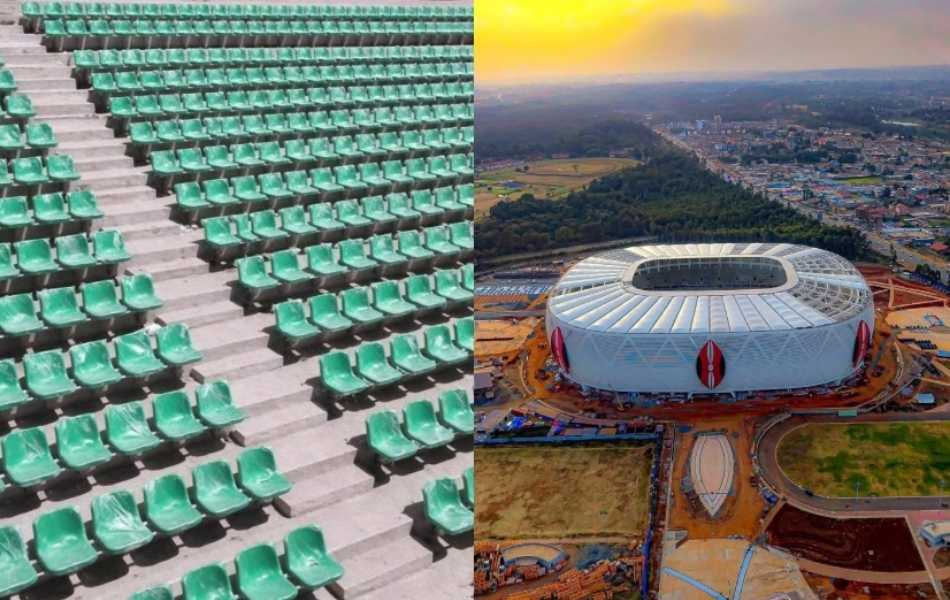
Kasarani, which staged matches during the 2024 African Nations Championship (CHAN), currently has Bermuda grass. However, it will need an upgrade to a hybrid surface to handle the rigors of AFCON. Talanta Sports City, still under construction and earmarked to host the tournament’s final, will also feature hybrid grass once completed.
Across the borders, Uganda’s Nelson Mandela Stadium in Namboole is already using a hybrid system, while Hoima National Stadium will soon join the list. In Tanzania, Benjamin Mkapa Stadium in Dar es Salaam and Amani Stadium in Zanzibar are set to host matches, with Amani already boasting a hybrid pitch.
Why Hybrid Grass is Preferred
Speaking on the Iko Nini podcast, Kivusi explained that hybrid turf has clear advantages compared to traditional grass.
“Bermuda and paspalum are examples of natural grasses where hybrid varieties have been developed. These hybrid types are more resilient, offer better growth, and provide a high-quality playing surface,” he said.
At Nyayo Stadium, the pitch uses Kikuyu grass, which, according to Kivusi, still lacks hybrid variations. He further noted that “hybrid” can also refer to pitches that combine natural grass with synthetic fibers, a technique used in many modern arenas.
“For instance, Zanzibar’s Amani Stadium uses such a model, blending artificial and natural grass. Ratios can vary, sometimes 85% synthetic and 15% natural, depending on whether the venue has a roof or is open-air,” he explained.
Addressing Light and Maintenance Challenges
Kivusi highlighted that natural grass needs sufficient sunlight for photosynthesis, which is a challenge in covered stadiums.
“In Europe, most enclosed stadiums rely on artificial lighting systems to sustain grass growth. Where these systems are costly, hybrid pitches offer a practical solution. They ensure durability and consistent performance even in low-light conditions,” he added.
Since Talanta Sports City is expected to feature a canopy, Kivusi believes a hybrid system is the only logical choice.
“It is very likely that a blend of natural and artificial grass will be adopted to ensure the pitch can handle the intensity of AFCON matches,” he concluded.